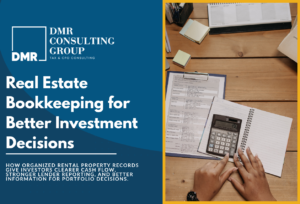

Once a real estate portfolio reaches several properties, bookkeeping stops being a matter of entering transactions and becomes a question of visibility. Owners need to see what each property is producing, how entities are performing together, and whether the portfolio can support its next acquisition or financing conversation.
What bookkeeping service is best for a multi-property real estate portfolio? A specialized real estate bookkeeping and accounting service that can maintain accurate property-level records while producing consolidated portfolio statements. The right provider should also connect clean books to tax coordination, cash flow planning, and practical investor decisions.
Get a free portfolio bookkeeping and reporting review to see whether your current setup is giving you the property-level and consolidated detail you need.
That distinction matters because a single undifferentiated profit-and-loss statement can hide underperforming assets, inconsistent coding, or obligations tied to a particular entity. DMR Consulting Group serves real estate investors with a portfolio-level approach, using cloud-based systems and an integrated accounting, tax, and CFO model. The evaluation starts with the reporting structure, systems, and expertise behind the service, not just the software used to record transactions.
What to Look for in a Bookkeeping Service for a Multi-Property Portfolio
Managing several properties requires more than recording rent deposits and matching transactions. The right bookkeeping service should show how each property performs, how each LLC is funded and operated, and how the portfolio functions as a whole. Before hiring a provider, evaluate whether its process can preserve detail without losing the larger financial picture.
Property-level accuracy and consolidated reporting
Start by asking how the provider separates the books for each property, LLC, or ownership group. Income, repairs, utilities, insurance, management fees, and debt costs should be assigned to the correct entity and property. Otherwise, a profitable building can hide a weak one, and an expense paid by one LLC can distort another entity’s results.
For investors managing five or more properties, multi-property bookkeeping requires both property-level statements and consolidated portfolio statements. Portfolio-level bookkeeping should let you review individual performance while also seeing combined revenue, expenses, cash flow, and obligations. Ask to see a sample reporting package and confirm that it includes both views, not merely a single account summary.

Real estate and entity-structure expertise
A provider serving real estate investors should understand recurring property transactions, capital improvements, owner contributions, distributions, security deposits, refinancing activity, and the difference between operating and financing costs. It should also know how to work within multi-entity structures without treating every account as if it belonged to the same business.
Ask how the team handles intercompany transfers, management-company charges, shared expenses, and transactions between related LLCs. The goal is not to create unnecessary complexity. It is to maintain records that are clear enough for tax preparation, partner conversations, lender requests, and your own investment decisions.
Cloud systems, dashboards, and reporting cadence
Technology matters when it improves access and consistency. A cloud-based accounting system can support real-time financial dashboards and secure document exchange, but software alone does not create reliable books. Confirm who reconciles accounts, how source documents are collected, which reports are delivered, and how quickly corrections are addressed. If the service can integrate with your property-management or accounting tools, ask specifically how data is reviewed after the connection is established. Guidance on real estate portfolio bookkeeping can help frame that conversation.
Advisory depth beyond data entry
Finally, look for a partner that explains what the numbers mean. Clean financial systems are essential when investors need to raise capital, obtain financing, or professionalize their accounting back office. A stronger service may identify cash-flow pressure, reporting gaps, or inconsistent property performance before those issues affect a refinance or acquisition decision. That does not mean the bookkeeper replaces your judgment. It means the records are organized well enough to support it.
Choose a provider that can deliver accurate entity-level books today and help you use consolidated financial information as the portfolio grows.
Why a Service That Understands Real Estate Beats a Generic Bookkeeper
Bookkeeping for a growing property portfolio is not simply a matter of importing transactions and assigning categories. Income, operating expenses, capital improvements, owner distributions, debt service, and property-level performance must fit together in a system that investors can actually use. A workflow that looks acceptable for one small business can become unreliable when several properties, entities, loans, and ownership interests are involved.
For investors managing five or more properties, the reporting need is both detailed and consolidated. Real estate bookkeeping requires property-level statements as well as portfolio-level consolidated statements. So the owner can see what is happening at each property without losing sight of the entire operation. Portfolio-level bookkeeping should support decisions, not merely close the books.
| Option | Best for | Main limitation | Portfolio reporting strength |
|---|---|---|---|
| Do-it-yourself software | Owners with a simple structure, limited transactions, and time to maintain the books | Software can categorize activity, but it does not reliably interpret complex property, entity, improvement, distribution, and debt-service decisions without informed oversight | Basic to moderate. Often depends on consistent setup and manual consolidation |
| Generic virtual bookkeeper | Small businesses with conventional revenue and expense patterns | May lack the context to distinguish property operations from capital improvements, owner activity, financing, or investor reporting needs | Moderate at the property level, but inconsistent across entities and the full portfolio |
| Specialized real estate accounting or bookkeeping firm | Growing investors, operators, and owners managing multiple properties or entities | Higher investment than software alone, although the service includes expertise, review, and reporting design | Strong. Connects property-level detail to consolidated portfolio reporting and decision support |
The difference is context, not just data entry
A specialist understands why two similar-looking payments may need different treatment. How debt service affects cash flow visibility, and why owner distributions should not be confused with operating performance. That context also helps preserve useful comparisons across properties. Without it, a portfolio may show clean-looking totals while obscuring which asset is producing cash. Which one is consuming reserves, and which costs are tied to long-term improvements rather than routine operations.
The right service should also make financial information easier to act on. A robust financial system can support capital raising, financing conversations, and a more professional accounting back office. Cloud-based implementation may add secure document exchange and real-time financial dashboards. But technology is most valuable when the underlying chart of accounts, property structure, and review process are sound.
For a growing multi-property investor, a specialized firm that consolidates the portfolio while preserving property-level detail is the strongest choice. It combines the operational visibility of a well-managed ledger with the broader perspective needed for financing, tax coordination, and better portfolio decisions. That is the practical answer to What bookkeeping service is best for a multi-property real estate portfolio?
How a Real Estate Bookkeeping Service Handles a Multi-Property Portfolio
Managing several properties requires more than entering transactions into a ledger. Each property may have its own income, operating costs, debt obligations, ownership structure, and reporting needs. At the same time, the investor needs a reliable view of the portfolio as a whole. DMR Consulting Group structures its bookkeeping service around both perspectives, so property-level detail is preserved while consolidated reporting supports higher-level decisions.
Separate records, connected portfolio reporting
DMR organizes financial records by property and entity, then brings that information together in consolidated portfolio statements. This approach helps investors see which properties are producing cash flow, where expenses are increasing. And how results compare across the portfolio without losing the detail needed for accurate accounting and tax work. For investors managing five or more properties, property-level and portfolio-level statements are both necessary parts of a useful financial system.
The reporting structure also gives owners a more practical basis for planning. A consolidated statement can show the portfolio’s overall position, while property-level reports help identify the operational cause behind that result. Investors can then evaluate renovation spending, operating performance, distributions, or a potential acquisition using records that are organized for the way their businesses actually operate. DMR’s bookkeeping for multi-property real estate approach connects this reporting foundation to cash flow planning.
Cloud systems that keep financial information accessible
Portfolio bookkeeping is more useful when the underlying information is current and accessible. DMR implements cloud-based accounting systems that support real-time financial dashboards and secure document exchange. Investors and their advisory team can work from a shared, controlled information flow rather than relying on scattered spreadsheets, email attachments, or delayed month-end updates.
That visibility matters when a decision depends on current numbers. A dashboard can make trends easier to spot, while secure document exchange creates a more dependable process for collecting invoices, closing documents, loan records, and other supporting materials. The technology does not replace professional judgment. It gives the accounting and advisory team a cleaner base for applying it.
Accounting, tax, and CFO advice in one delivery model
DMR uses a three-pillar model that integrates accounting, tax, and CFO advisory. The goal is to turn financial data into a decision-making tool, not treat bookkeeping as a compliance task that ends when entries are posted. Accounting establishes dependable records, tax expertise helps coordinate reporting and planning considerations, and CFO advisory connects the numbers to questions about cash flow, financing, growth, and portfolio priorities.
This model reflects DMR’s positioning as a firm built “by real estate investors. For real estate investors.” Its team includes active real estate investors who understand that clean books need to serve acquisition analysis. Lender conversations, capital planning, and day-to-day operating decisions. Investors evaluating best bookkeeping services should therefore look beyond software or transaction volume and ask whether the provider can support the portfolio’s next stage.
For owners who need a more structured financial back office, DMR’s accounting and CPA services provide a path from property-level bookkeeping to coordinated portfolio reporting and advisory support.
Portfolio-Level Reporting and the P&L Metrics Investors Actually Use
A portfolio can look healthy in aggregate while one property is quietly absorbing cash. That is why multi-property investors need more than a monthly transaction list or a single consolidated balance sheet. Useful reporting should show what each property is producing, what it is consuming, and how those results affect the portfolio’s broader cash position.
Track the operating numbers that drive decisions
Operating cash flow is the first practical measure. It shows how much cash remains after collecting property income and paying ordinary operating expenses, before considering owner distributions and financing decisions. Comparing operating cash flow across properties can reveal which assets are dependable, which need tighter expense control, and which may require a capital plan.
Net operating income, or NOI, provides a complementary view. NOI generally reflects property revenue minus operating expenses, excluding financing costs and owner-level items. Keeping those categories consistent matters. If repairs, management fees, insurance, or other expenses are coded differently from one property to the next. Comparisons become less reliable and the portfolio’s apparent performance can shift based on bookkeeping habits rather than actual operations.

Debt service should remain visible rather than buried in a consolidated total. Separating principal and interest, where appropriate to the reporting system, helps investors understand both the financing burden and the way debt affects cash available after operations. Owner distributions also deserve their own line of sight. A distribution is a movement of cash to an owner, not evidence that a property generated additional operating income. Distinguishing the two helps prevent distributions from being mistaken for sustainable performance.
Use property-level detail beside the consolidated view
For investors managing five or more properties, property-level and portfolio-level consolidated statements work together. A per-property P&L supports decisions about rents, expenses, reserves, refinancing, and whether an asset is meeting its intended role. The consolidated portfolio view helps evaluate total liquidity, intercompany activity, aggregate debt service, and the capital demands of the entire operation.
This structure also improves conversations with lenders, partners, and prospective investors. Clean financial systems are essential for raising capital and obtaining financing because reviewers can trace portfolio totals back to the underlying properties and entities. Consistent reports make due diligence more efficient, reduce avoidable questions, and give stakeholders a clearer basis for assessing risk.
Turn bookkeeping into an operating tool
The goal is not simply to produce reports for compliance. Bookkeeping becomes more valuable when it helps an investor decide where to deploy capital, which property needs attention, and whether projected cash flow supports the next acquisition. If your reporting needs have outgrown property-by-property spreadsheets, review when you need portfolio-level accounting and consider whether your current system supports the decisions ahead.
Recordkeeping and Tax Considerations for Multi-Property Books
Recordkeeping for a multi-property portfolio is more than storing receipts and reconciling bank accounts. Each property, lender, tenant relationship, and ownership entity can create a separate reporting trail. If those records are incomplete or combined too early, it becomes harder to explain rental income, support deductions, prepare returns, or make confident operating decisions.
The IRS generally requires landlords to include all amounts received as rent in gross income. That can include advance rent, security deposits kept by the landlord, payments received when a lease is canceled, and expenses paid by a tenant on the landlord’s behalf. See the IRS guidance on rental real estate income, deductions, and recordkeeping for the applicable details. Your bookkeeping system should give these items a clear category and property assignment instead of leaving them buried in a general deposit account.
Track the property before consolidating the portfolio
- Record income and ordinary operating expenses at the individual property level, with consistent categories across the portfolio.
- Separate capital improvements from repairs and maintenance so the tax treatment and asset records can be reviewed accurately.
- Organize loan statements, closing documents, insurance records, leases, tenant payments, and entity-level transactions in a searchable system.
- Reconcile intercompany transfers and owner contributions so activity between LLCs or properties is not mistaken for revenue or an expense.
That property-first structure does not mean investors should view every asset in isolation. Once the underlying records are accurate, the books should produce both property-level reporting and a consolidated portfolio view. The first helps identify unusual expenses, vacancies, or operating changes. The second helps an investor assess cash flow, debt obligations, and the financial position of the broader business.
Keep records beyond the current tax filing
Retention schedules also matter. The IRS says taxpayers should keep records relating to property until the period of limitations expires for the year in which the property is disposed of in a taxable disposition. For assessment of tax, that limitation period is generally three years from the date the return was filed. Those rules are not a substitute for a retention policy tailored to your entities and transactions. But they show why deleting old property files after a return is accepted can create unnecessary risk.
A real-estate-aware accounting firm can help maintain the property and entity detail while connecting the books to tax preparation and forward-looking planning. The goal is not simply cleaner compliance records. It is a dependable financial foundation for evaluating portfolio performance, preparing for financing, and deciding what to do next.
Contact DMR Consulting Group to discuss how consistent property-level books and portfolio reporting can strengthen your tax coordination and operating decisions.
Frequently Asked Questions
What bookkeeping service is best for a multi-property real estate portfolio?
The best fit is a bookkeeping or accounting service with specific real estate experience, property-level accounting, consolidated portfolio reporting, and the ability to work across multiple entities. Look for a provider that can explain how it will separate each property’s income and expenses while also showing the portfolio’s overall performance.
Is real estate bookkeeping software enough, or do I need a bookkeeping service?
Software organizes transactions and can support dashboards, document exchange, and reporting, but it does not replace sound account mapping, reconciliations, transaction review, or professional interpretation. A bookkeeping service helps establish the system, maintain accurate records, and turn the resulting financials into information you can use for cash flow, financing, and operating decisions.
How many properties should I own before hiring a specialized bookkeeper?
There is no universal property count. The stronger indicator is complexity: multiple LLCs, mixed property types, outside investors, renovation activity, debt service, or a growing volume of transactions. Investors managing five or more properties commonly need both property-level records and consolidated statements, according to DMR’s portfolio bookkeeping guidance.
What should a portfolio-level P&L report show?
A useful report should show income, operating expenses, and net operating performance for each property, then consolidate those results for the full portfolio. It should also make it easier to review cash flow, owner distributions, debt service, and differences between properties without losing the detail needed to investigate an unusual result.
How long should I keep records for rental properties?
Keep records that support rental income, expenses, improvements, financing, and ownership for as long as they may be relevant to the property and related tax filings. The IRS says property records should generally be retained until the period of limitations expires for the year the property is disposed of in a taxable disposition. For tax assessment, that period is generally three years from the filing date, subject to exceptions. See the IRS recordkeeping guidance.
Get a Portfolio Bookkeeping Service Built Around Your Properties
Choosing the right bookkeeping service is easier when you can review the reporting structure, systems, and expertise behind it against your actual portfolio. DMR Consulting Group helps real estate investors organize property-level records, deliver consolidated portfolio reporting, and connect the books to tax and CFO guidance.
Schedule a portfolio bookkeeping and accounting review with DMR Consulting Group. A team member will look at your portfolio, entity structure, and reporting needs. And explain how a real-estate-focused service can give you clearer cash flow visibility and more dependable financials for the decisions ahead.