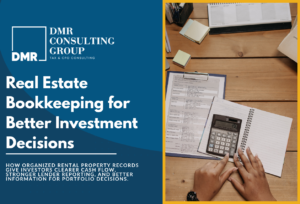

Do you know, with certainty, which of your properties is your most profitable? Not just which one brings in the most rent, but which one delivers the best return after every single expense is accounted for? Without a dedicated system, you’re likely making decisions based on gut feelings instead of hard data. This is where real estate accounting for an LLC becomes your most powerful tool for growth. It’s about more than just preparing for tax season; it’s about gaining crystal-clear insight into your portfolio’s performance. This guide will walk you through setting up a system that turns your financial data into a clear roadmap, helping you identify your winners, cut hidden costs, and make smarter investment decisions.
Key Takeaways
- Separate Your Finances to Protect Your Assets: Treat your LLC as a distinct business from day one by opening a dedicated bank account. This simple action is crucial for protecting your personal assets, simplifying your bookkeeping, and maintaining the legal shield your LLC provides.
- Track Every Transaction with Precision: A consistent system for recording income and expenses is the key to accurate financial reports. Correctly classify items like security deposits, repairs, and capital improvements to get a true picture of your profitability and prepare for a stress-free tax season.
- Use Financial Insights to Grow Your Portfolio: Don’t just collect data; use it to make smarter decisions. Regularly review your financial statements to understand property performance and work with a professional to apply tax strategies, like depreciation, that can reduce your tax liability and improve cash flow.
What is Real Estate Accounting for an LLC?
Real estate accounting is more than just basic bookkeeping. It’s a specialized system for tracking the income, expenses, and financial health of your properties. For investors using a Limited Liability Company (LLC), this process is absolutely essential. Proper accounting maintains the legal separation between your personal and business finances, which is a primary benefit of forming an LLC in the first place. It ensures your records are clean for tax season and gives you the clear financial data you need to make smart decisions about your portfolio.
Why Choose an LLC for Real Estate Investing?
The main reason real estate investors choose an LLC is for asset protection. Think of it as a legal shield between your investment properties and your personal life. If a tenant sues over an issue at one of your properties, the liability is contained within the LLC. This structure generally protects your personal assets, like your family home, car, and savings accounts, from being targeted in a lawsuit. Beyond protection, operating as an LLC also adds a layer of professionalism. Banks, potential partners, and tenants often view an LLC as a more formal and credible business, which can make it easier to secure loans and grow your operations.
Understanding the Legal and Financial Perks
One of the biggest financial advantages of an LLC is its pass-through taxation. Instead of the business being taxed separately, the profits and losses “pass through” directly to your personal tax return. This structure helps you avoid the double taxation that corporations often face. It also allows you to deduct a wide range of business expenses, such as mortgage interest, property management fees, and maintenance costs. As real estate investors, we at DMR Consulting Group know these deductions add up. Plus, you can take advantage of depreciation, a powerful tax deduction that lets you write off the cost of a property over time. For residential properties, this period is 27.5 years, and for commercial properties, it’s 39 years, providing significant annual tax relief.
Core Accounting Principles for Real Estate LLCs
Getting your real estate LLC’s finances in order might feel like a huge task, but it all comes down to a few foundational ideas. Think of these as the rules of the road for your money. Once you understand them, you’ll have a much clearer view of your business’s financial health and be able to make smarter investment decisions. Let’s walk through the three core principles that form the backbone of all real estate accounting.
The Real Estate Accounting Equation Explained
At the heart of all accounting is a simple, powerful formula: Assets = Liabilities + Equity. This isn’t just a suggestion; your books must always keep this equation balanced. For your real estate LLC, assets are what you own, like your properties and the cash in your business bank account. Liabilities are what you owe, such as mortgages and other loans. Equity is what’s left over; it’s your stake in the business, including your initial investment and any profits you’ve retained. Keeping this equation in check is the first step toward accurate financial tracking and is fundamental to our accounting and CPA services.
How Double-Entry Bookkeeping Works
Double-entry bookkeeping is the system that keeps the accounting equation in balance. For every transaction, you make at least two entries: a debit and a credit. Don’t let the terms intimidate you. Think of it this way: when you receive a rent check, your cash (an asset) goes up, and your rental income (income) also goes up. One is a debit, the other a credit, and they are always equal. This method creates a built-in check and balance, making it easier to spot errors and maintain accurate records. Every financial move, from paying a utility bill to receiving a security deposit, has two sides, ensuring your financial story is always complete and correct.
Choosing Your Method: Cash vs. Accrual
You have two main options for recording your transactions: the cash method or the accrual method. With the cash method, you record income when the money hits your account and expenses when you actually pay them. It’s straightforward and easy to manage. The accrual method, on the other hand, records income when you earn it (like when rent is due) and expenses when you incur them (when you get the bill), regardless of when cash changes hands. While more complex, the accrual method provides a more accurate picture of your profitability over time. Making the right choice is a key strategic decision, which is where expert CFO services can provide critical guidance for your growing portfolio.
How to Set Up Your LLC’s Accounting System
Once your LLC is officially formed, your next big move is to build a solid accounting system. I like to think of this as the financial foundation for your entire real estate business. Getting it right from the start will save you countless hours and potential headaches down the road, especially when it’s time to track profitability and prepare for tax season. A well-organized system isn’t just about compliance; it gives you a clear, real-time view of your portfolio’s performance. This clarity is what allows you to make smarter, data-driven investment decisions instead of relying on guesswork. It helps you answer critical questions like, “Which property is my most profitable?” or “Am I spending too much on maintenance?”
Setting up your accounting system doesn’t have to be an overwhelming task. It really boils down to three essential steps: separating your personal and business finances, creating a chart of accounts tailored to real estate, and establishing a consistent process for keeping records. By tackling these tasks early on, you ensure your financial data is accurate, compliant, and genuinely useful for growing your investments. Our accounting and CPA services are designed to help investors like you build this foundation correctly from day one, so you can focus on finding your next great deal.
Separate Your Personal and Business Finances
This is the golden rule of business ownership, and it’s especially important for real estate investors. Mixing your personal and business finances, also known as commingling funds, can create a massive accounting mess. More importantly, it can jeopardize the personal liability protection your LLC provides, which is likely one of the main reasons you formed it in the first place. To maintain that “corporate veil,” you must treat your LLC as a completely separate entity.
The first actionable step is to open a dedicated business bank account and get a business credit card. All income from your properties should be deposited into this account, and all business-related expenses should be paid from it. This simple habit creates a clean, easy-to-follow paper trail for every transaction, making bookkeeping and tax preparation significantly more straightforward.
Create a Real Estate Chart of Accounts
A chart of accounts is essentially the index for your financial books. It’s a complete list of every account you use to record transactions, neatly organized into categories like assets, liabilities, equity, income, and expenses. While generic accounting software offers a basic template, you’ll want to customize it for real estate. Developing a real estate chart of accounts is vital for tracking income and expenses specific to your properties.
This allows you to monitor financial performance at the property level, giving you much more precise oversight. Your chart of accounts should include specific categories like Rental Income, Property Management Fees, Repairs and Maintenance, Property Taxes, and Mortgage Interest. This detailed breakdown helps you see exactly where your money is coming from and where it’s going, which is critical for strategic planning and our expert CFO services.
Establish Your Record-Keeping Process
A robust record-keeping process is the engine that keeps your accounting system running smoothly. Without it, you risk losing track of transactions, missing out on valuable tax deductions, and facing major issues if you’re ever audited. Real estate involves a high volume of financial activity, from rent collection to contractor payments, so a systematic approach is non-negotiable for maintaining financial clarity and staying compliant.
Decide how you will document and store everything. This could involve using real estate accounting software, scanning receipts into a cloud service, or simply keeping organized digital folders for every property. The key is consistency. Set aside time each week or month to update your books, categorize transactions, and reconcile your accounts. This discipline ensures your financial records are always accurate and up-to-date, making it easier to file taxes with the help of our tax services.
How to Record and Categorize Real Estate Transactions
Once your accounting system is set up, the real work begins: day-to-day bookkeeping. This is where the rubber meets the road for your real estate LLC. It’s not just about tracking money in and money out; it’s about telling the financial story of your properties. Every transaction, from a rent payment to a roof repair, needs a home in your books. Proper recording and categorization are the foundation of sound financial management. Without it, you’re flying blind. You won’t know if a property is truly profitable, you’ll miss out on valuable tax deductions, and you could find yourself in hot water if you’re ever audited.
Think of your chart of accounts as a filing cabinet. Each transaction is a document that needs to be placed in the correct folder. When you categorize transactions correctly from the start, you make everything downstream easier. Generating financial statements becomes a simple click of a button. Tax time transforms from a frantic scramble to a calm, organized process. Most importantly, you gain clear insight into your portfolio’s performance, allowing you to make smart, data-driven decisions. As real estate investors ourselves, we at DMR Consulting Group know that disciplined bookkeeping is a non-negotiable habit of every successful investor. It’s the difference between treating your investments like a hobby and running them like a true business.
Tracking Acquisition and Improvement Costs
When you purchase a property, the first entry in your books is a big one. Your LLC records the property as an asset on your balance sheet. The purchase price, along with other closing costs like title fees and legal expenses, establishes the property’s “cost basis.” You’ll also record how you paid for it, whether through a loan (a liability called Notes Payable) or with your own funds (an Owner Contribution). It’s also important to distinguish between repairs and improvements. A simple repair is a current expense, but a major improvement, like a new kitchen, is a capital expenditure. These costs are added to your property’s basis, which can have significant tax implications down the line. Keeping these accounting practices for your LLC straight from day one is essential.
Managing Rental Income and Security Deposits
Recording rental income seems straightforward, and for the most part, it is. When a tenant pays rent, you record it as revenue for your LLC. Simple enough. Where investors often get tripped up is with security deposits. A security deposit is not your money, so it is not income. Instead, you must record it as a liability on your balance sheet. This is a key principle in real estate accounting that keeps your books accurate and shows you owe that money back. If you eventually return the deposit, the liability is removed. If you use part of it for damages, that portion becomes income to offset the repair expense. Properly handling security deposits is critical for both financial accuracy and legal compliance.
Classifying Operating and Maintenance Expenses
Every dollar you spend to keep your property running is an operating expense. This includes a wide range of costs, such as property management fees, insurance premiums, utilities, marketing for new tenants, and general maintenance and repairs. The key is to categorize these expenses with care. Instead of lumping everything into one “Property Expenses” bucket, create specific categories like “Repairs,” “Utilities,” and “Insurance.” This level of detail does more than just keep you organized. It allows you to analyze where your money is going, identify opportunities to cut costs, and ensure you’re claiming every possible rental property tax deduction. Accurate expense tracking is the only way to truly understand your property’s net operating income (NOI) and overall profitability.
Accounting for Depreciation and Capital Expenditures
Depreciation is one of the most powerful benefits of real estate investing, but it’s a concept that exists only on paper. It’s a non-cash expense that allows you to deduct a portion of your property’s cost basis each year, reflecting its gradual wear and tear. The IRS sets the schedule: residential properties are depreciated over 27.5 years and commercial properties over 39 years. This is a significant tax deduction for real estate LLCs that can lower your taxable income without affecting your cash flow. Capital expenditures, like that new roof or HVAC system, are treated differently from regular repairs. Instead of being expensed immediately, they are added to your property’s basis and depreciated over time, giving you a long-term tax benefit.
What to Look for in Real Estate Accounting Software
Choosing the right accounting software is a foundational step for your real estate LLC. Generic accounting tools often fall short because they lack the functions needed to manage properties effectively. Real estate has unique financial needs, from handling security deposits to tracking depreciation. Your software should be a partner in your growth, not a roadblock. To find the right fit, focus on three critical areas: property-specific features, integration and reporting, and the balance between cost and scalability.
Key Features for Property Management
Specialized software is a game-changer here. General accounting tools weren’t built to track finances on a property-by-property basis, which is essential for understanding performance. Look for a platform with custom features for landlords, like tenant portals for online rent collection, lease tracking, and maintenance request systems. These tools go beyond simple bookkeeping; they help you operate your rental business more efficiently. When your software knows the difference between a capital improvement and a routine repair, you’re on the right track.
Integration and Reporting Capabilities
As your portfolio grows, you need a system that can keep up. Your software should sync with your bank accounts to automate transaction imports. If you manage multiple properties across different LLCs, you’ll want a platform with strong integration. For example, investors with several entities benefit from software with native consolidation support built in. This gives you a clear financial picture without manual spreadsheet work. Powerful reporting is also non-negotiable. You need the ability to generate detailed profit and loss statements for each property and get a high-level view of your portfolio’s health.
Balancing Cost and Scalability
It’s easy to focus on price, but cost shouldn’t be the only factor. While there are excellent, low-cost options for those just starting, think about where your business will be in a few years. Will the software you choose today support that growth? A system is scalable if it can handle more properties and transactions without becoming cumbersome. You’re looking for the sweet spot: a platform that fits your budget now but has the capacity to grow with you. This prevents the major headache of migrating all your financial data later.
The Financial Statements Every Real Estate LLC Needs
Once your accounting system is up and running, it’s time to put that data to work. Financial statements are more than just year-end requirements; they are powerful tools that tell the story of your investment’s performance. For any real estate LLC, there are three key reports you’ll want to review regularly to stay on top of your finances and make smart, data-driven decisions.
Your Rental Property Income Statement
Think of the income statement, often called a profit and loss (P&L) statement, as your property’s financial report card. It summarizes your revenues and expenses over a specific period, like a month or a quarter, giving you a clear picture of your profitability. Key components include all your rental income minus your operating expenses, such as maintenance, property management fees, and insurance. The final number is your net operating income (NOI), which shows what the property is earning before mortgage payments and taxes. Regularly reviewing this statement helps you spot trends, see where your money is going, and make better decisions to improve your bottom line.
The Balance Sheet: Tracking Assets and Liabilities
While the income statement shows performance over time, the balance sheet offers a snapshot of your LLC’s financial position on a single day. It’s a simple but powerful equation: Assets = Liabilities + Equity. Assets are everything your LLC owns that has value, like the property itself, cash in the bank, and any rent you’re owed. Liabilities are what your LLC owes, primarily mortgages and other loans. What’s left over is your equity. This statement is essential for understanding your LLC’s net worth and overall financial health. It shows you exactly what you own versus what you owe, giving you a clear indicator of your investment’s stability.
Understanding Your Cash Flow Statement
Profit doesn’t always equal cash in the bank, and that’s where the cash flow statement comes in. This report tracks the actual movement of cash in and out of your LLC. It’s broken down into three parts: cash from operating activities (like collecting rent and paying bills), investing activities (like buying a new property), and financing activities (like paying down a mortgage). This statement is critical for managing your liquidity. It ensures you have enough cash on hand to cover your immediate obligations and seize new investment opportunities. It’s the true test of your property’s ability to sustain itself financially.
What Are the Tax Advantages for Real Estate LLCs?
Choosing an LLC for your real estate ventures is about more than just liability protection; it’s a strategic financial decision. The way an LLC is structured for tax purposes can open up significant savings opportunities that aren’t available to individual investors. When you understand how to use these advantages, you can substantially lower your tax bill and increase your investment returns. The key benefits come from how your income is taxed, the expenses you can deduct, and special provisions in the tax code designed for business owners. Let’s walk through some of the most impactful tax perks you gain when you operate your properties through an LLC.
The Benefit of Pass-Through Taxation
One of the most significant advantages of an LLC is its default tax status. The IRS treats a single-member LLC as a “disregarded entity,” meaning the business itself doesn’t pay income taxes. Instead, you experience pass-through taxation, where the profits and losses “pass through” to your personal tax return. You report all business income and expenses on a Schedule C (for a single-member LLC) or Schedule E (for rental income) filed with your Form 1040. This structure helps you avoid the “double taxation” that C-corporations face, where the company pays taxes on its profits, and then shareholders pay taxes again on their dividends. This simpler approach keeps more money in your pocket.
Key Property-Related Tax Deductions
As a real estate investor with an LLC, you can deduct the ordinary and necessary expenses of managing your properties. These rental property deductions directly reduce your taxable income, which is a huge win for your bottom line. Common write-offs include mortgage interest, property taxes, landlord insurance premiums, and the costs of maintenance and repairs. You can also deduct operating expenses like utilities, property management fees, and marketing costs. One of the most powerful deductions is depreciation, which allows you to recover the cost of your property over time. Diligent record-keeping is essential here; every documented expense helps lower your tax burden and accurately reflects your investment’s performance.
Using the Section 199A Deduction
The Tax Cuts and Jobs Act introduced a game-changer for many business owners: the Section 199A deduction, often called the Qualified Business Income (QBI) deduction. If you qualify, you can deduct up to 20% of your qualified business income from your rental activities. This is a below-the-line deduction, meaning it lowers your taxable income without requiring you to itemize. For real estate investors, this can translate into thousands of dollars in tax savings. The rules for qualifying can be complex, as they depend on factors like your income level and whether your rental activity rises to the level of a trade or business. It’s a great idea to work with a tax professional to see if you’re eligible.
How to Avoid Common Real Estate Accounting Mistakes
Even the most experienced real estate investors can fall into a few common accounting traps. While these mistakes are easy to make, they are also completely avoidable with a bit of foresight and discipline. Getting your accounting right from the start protects your assets, keeps you compliant, and gives you a clear picture of your portfolio’s performance. It’s the foundation of a scalable and profitable real estate business. Let’s walk through some of the most frequent missteps and how you can steer clear of them.
Mixing Personal and Business Expenses
This is rule number one for a reason: never mix your personal and business finances. It can be tempting to pay for a repair with your personal credit card in a pinch, but this habit can cause major problems. When you co-mingle funds, you risk “piercing the corporate veil.” This legal term means that if your LLC is sued, a court could decide that your business isn’t truly a separate entity, putting your personal assets like your home and savings at risk.
The fix is simple. Before you do anything else, open a dedicated business bank account and get a business credit card for your LLC. Run every single dollar of income and every single expense through these accounts. This simple separation is the most important step you can take to protect your liability and simplify your bookkeeping. Our accounting and CPA services always begin by ensuring this fundamental separation is in place.
Keeping Inadequate Records
A shoebox full of faded receipts just won’t cut it. Inadequate record-keeping is a direct path to lost money and stressful audits. Without clear documentation, you can easily miss out on valuable tax deductions for things like mileage, repairs, and professional fees. If the IRS ever comes knocking, a lack of organized records makes it incredibly difficult to defend your tax return, which could lead to penalties and back taxes.
From day one, establish a system for keeping every document related to your properties. This includes closing statements, receipts for repairs, bank and credit card statements, and lease agreements. Whether you use accounting software or a detailed spreadsheet, consistency is what matters most. Poorly managed financial records can quickly undermine your investment goals, so make detailed record-keeping a non-negotiable part of your routine.
Misclassifying Income and Expenses
Putting a transaction in the wrong category might seem like a small error, but it can have a big impact on your financial statements and tax liability. For example, did you replace a few shingles (a repair expense) or install an entirely new roof (a capital improvement)? The first is deducted in the current year, while the second is depreciated over many years. Getting this wrong can distort your property’s profitability and lead to incorrect tax payments.
Another common mistake is treating a tenant’s security deposit as income. It isn’t. It’s a liability you hold until the tenant moves out. Understanding these distinctions is crucial for accurate financial reporting. Proper classification ensures you have a true understanding of your cash flow and helps you build a solid tax strategy that maximizes your deductions legally and ethically.
Forgetting to Consult a Professional
Trying to handle all your own accounting to save a few dollars is often a costly mistake. Real estate accounting comes with its own set of complex rules around depreciation, capital gains, and passive activity losses that differ significantly from other industries. A general accountant may not have the specialized knowledge to help you take full advantage of the benefits available to real estate investors.
Working with an expert who specializes in real estate is an investment, not an expense. A professional can help you avoid the pitfalls we’ve discussed, ensure you’re compliant with tax laws, and identify strategic opportunities to improve your returns. They provide the financial clarity and confidence you need to grow your portfolio. If you’re feeling unsure about your books, it’s always a good idea to consult with an expert who lives and breathes real estate finance.
Tax Strategies to Maximize Your Returns
Effective accounting is about more than just tracking past transactions; it’s about planning for the future. For real estate investors, a smart tax strategy is one of the most powerful tools for building wealth. By going beyond standard deductions and using advanced tactics, you can significantly reduce your tax burden and keep more of your returns working for you. These strategies require careful planning, but the payoff can be substantial. Here are a few key approaches that can make a real difference in your portfolio’s performance.
How to Qualify as a Real Estate Professional
Qualifying for Real Estate Professional (REP) status with the IRS can be a game-changer. Normally, rental income and losses are “passive,” meaning you can only use those losses to offset other passive income. As a REP, you can treat your rental losses as “active,” allowing you to deduct them against other income, like your salary. This can dramatically lower your overall tax bill. The IRS has strict tests for this status based on the hours you spend on your real estate activities. Handling these requirements is complex, so working with a specialist who understands real estate tax services is key to ensuring you qualify correctly and maximize the benefits.
Using Tax-Loss Harvesting
Tax-loss harvesting is a savvy strategy that involves selling an investment at a loss to offset the taxes you owe on capital gains. For example, if you sell a rental property for a large profit, you’ll face a capital gains tax. To minimize that hit, you could sell another asset from your portfolio, like stocks, that has decreased in value. The loss from that sale can offset the gain from your property, reducing your taxable income. This technique requires careful timing and an understanding of tax regulations, like the wash-sale rule, but it’s an effective way to manage your tax liability across your entire investment portfolio.
Strategically Timing Income and Expenses
As a real estate investor, you have significant control over when you recognize income and pay expenses. By strategically timing these events, you can directly influence your tax bill. For instance, if you anticipate being in a higher tax bracket this year, you could accelerate some expenses. You might prepay property taxes or make necessary repairs before December 31st to increase your deductions. Conversely, you could try to delay receiving a January rent payment until after the new year begins. This proactive financial management is a core part of our CFO services, helping you make data-driven decisions that improve your cash flow and long-term returns.
Best Practices for Managing Your LLC’s Finances
Managing your real estate LLC’s finances is more than just tracking rent checks and paying bills; it’s about building a strong foundation for sustainable growth. While setting up your accounting system is a critical first step, the real work lies in the ongoing management of your money. Adopting a few key habits can transform how you handle your finances, moving you from simply reacting to issues to proactively shaping your financial future. These practices are about creating a clear path to your investment goals.
Think of it as the difference between owning a car and being a skilled driver. Anyone can have the keys, but it takes practice and good habits to get where you want to go safely and efficiently. By consistently reviewing your performance, knowing when to bring in an expert, and planning for the long haul, you can ensure your business is not only profitable but also resilient. These strategies are central to the advisory and financial services we provide, helping investors like you build lasting wealth. Let’s look at three best practices you can implement right away to strengthen your financial processes.
Conduct Monthly Financial Reviews
Think of a monthly financial review as a quick health check for your real estate business. It’s your chance to catch small issues before they become big problems. Each month, set aside time to look over your financial statements. Are your expenses tracking to your budget? Is your rental income where you expect it to be? This is also the perfect time to spot any miscategorized transactions that could cost you during tax season. Ineffective accounting practices can easily lead to financial headaches, but a consistent monthly review process keeps your books clean and your business compliant. Our Accounting and CPA Services can help you establish a simple, effective review routine.
Know When to Get Professional Support
Doing it yourself is a huge part of being an entrepreneur, but smart investors know their limits. There will be times when calling in a professional is the most strategic move you can make. If you’re facing a complex transaction, preparing for an audit, or simply feel like your record-keeping is getting out of hand, it’s time to ask for help. A real estate accountant can ensure your depreciation methods are correct and that you’re not missing out on valuable tax deductions. Our team of experienced investors and accountants provides expert tax services to help you make the most of your investments and stay compliant with ever-changing laws.
Create a Long-Term Financial Plan
Your day-to-day bookkeeping keeps the lights on, but a long-term financial plan is what builds your legacy. This plan is your roadmap, guiding your decisions and keeping you focused on your ultimate goals. Do you want to acquire five more properties in the next ten years? Or maybe your goal is to pay off all your mortgages and live off the cash flow? A solid plan helps you manage your multiple income streams and prepare for future growth. It turns your collection of properties into a cohesive, powerful investment portfolio. Our CFO services are designed to help you build this strategic plan, giving you the clarity and direction needed to achieve your long-term vision.
Related Articles
- The Ultimate Guide to Real Estate Accounting
- 10 Smart Tax Strategies for Rental Properties
- Real Estate Accounting: A Florida Investor’s Guide
Frequently Asked Questions
I just formed my LLC. What is the absolute first financial step I should take? Before you do anything else, walk into a bank and open a dedicated business checking account and get a business credit card. This is the most important step you can take to protect the legal shield your LLC provides. All rental income must go into this account, and all property expenses must be paid from it. This simple habit creates a clean financial trail and makes bookkeeping infinitely easier, but more importantly, it maintains the legal separation between your business and your personal life.
Should I use the cash or accrual accounting method for my properties? This is a great question, and the answer depends on your situation. The cash method is simpler: you record income when you receive it and expenses when you pay them. It’s easy to manage, especially when you’re starting out. The accrual method is more complex, recording income when it’s earned (like when rent is due) and expenses when they’re incurred (when you get a bill). While it requires more effort, accrual accounting gives you a much more accurate picture of your property’s true profitability over time. Many small investors start with cash and switch to accrual as their portfolio grows.
What’s the real difference between a repair and a capital improvement? Think of it this way: a repair maintains the property’s current condition, while an improvement makes it better. Fixing a running toilet is a repair. Replacing the entire bathroom with a modern one is a capital improvement. This distinction is critical for your taxes. You can deduct the full cost of a repair in the year you pay for it. A capital improvement, however, is added to your property’s cost basis and deducted over many years through depreciation. Getting this right ensures your financial statements are accurate and you’re following tax law correctly.
I’m pretty organized. Do I still need to hire an accountant who specializes in real estate? Being organized is a huge asset, but a specialized real estate accountant offers much more than just bookkeeping. They provide strategic advice on complex issues specific to our industry, like cost segregation studies, qualifying for Real Estate Professional Status, and navigating 1031 exchanges. A general accountant might not be familiar with these powerful wealth-building tools. An expert helps you move beyond just recording what happened and starts planning how to improve your financial outcomes and tax position in the future.
If I only have time to look at one financial report each month, which one should it be? While all three main statements (Income Statement, Balance Sheet, and Cash Flow Statement) are important, your Income Statement (or P&L) is the best for a quick monthly health check. It directly answers the most fundamental question: “Is this property making money?” It shows your rental income and subtracts your operating expenses to give you a clear look at your net operating income. Reviewing this report monthly helps you spot rising costs or income dips early, so you can take action before they become bigger problems.