
Scaling a commercial portfolio beyond five properties often breaks standard bookkeeping tools. Small errors in rent rolls or CAM reconciliations can hide thousands of dollars in lost profit. You need a data-driven approach to maintain clear cash flow views.
Ready to scale your commercial real estate portfolio with precision? Schedule a free commercial real estate portfolio consultation with DMR Consulting Group today.
Commercial real estate accounting is the specialized process of tracking income, expenses, and asset value for commercial properties. At DMR Consulting Group, we help investors navigate complex leases, CAM reconciliations, and tax planning to maximize cash flow and Net Operating Income (NOI) as they scale multi-property portfolios.
Managing a large portfolio requires you to know how these accounting rules impact your bottom line. You must see the gap between simple bookkeeping and the deep financial checks needed for commercial assets. We will start by looking at What Is Commercial Real Estate Accounting and Why Does It Matter? The path begins with
What Is Commercial Real Estate Accounting and Why Does It Matter?
Commercial real estate accounting is a type of money tracking made for buildings that earn rent. While simple books track daily sales, this field looks at the long-term health of large assets like office parks. It gives you the facts you need to manage cash flow and plan for growth across a large portfolio. Proper systems ensure you follow real estate investor accounting best practices to earn more.
How it differs from standard business books
Commercial real estate accounting needs focused care because the assets are complex. Unlike a small shop, a commercial property often has very long leases that last many years. You must also manage high costs for building repairs or new upgrades. These unique tax needs and spending plans mean you cannot use a simple approach for your books.
Most small business tools fail to track the specific needs of a commercial asset. For instance, you must separate daily repairs from major upgrades that add value over time. If you do not track these costs right, you might miss out on tax breaks or misread your actual profit. A strong system helps you see exactly where your money goes at every stage of the property life cycle.
The base for scaling your portfolio
As you grow to five or more properties, basic tracking is no longer enough. Modern accounting is key for tracking portfolio performance and cash flow in different states. The advisory team at DMR Consulting Group works with investors to build robust tracking systems that show you exactly which assets are doing well and which ones need more work. This data is the only way to make smart choices about when to buy or sell.
Good data also protects you during tax season. You must have clean records to prove your income and costs if you face an audit. Having a clear set of books makes it easy to find ways to lower your tax bill through planning. This level of detail is what lets expert investors grow their portfolios safely while following all the rules.
Reporting and federal compliance
Federal rules for property owners are strict about how you track your earnings. The IRS requires you to follow specific tips for rental income and recordkeeping to keep your filings correct. For example, most investors report income in the year they get it. Staying on top of these rules prevents costly errors and late fees. Utilizing our specialized strategic tax services helps keep your filings flawless.
Great recordkeeping does more than just help with taxes. It builds trust with banks and partners who want to see the true value of your assets. When your books are clean and up to date, you can move faster on new deals. It turns your data into a tool for building wealth rather than just a chore.
How Do You Separate Entity-Level vs. Property-Level Bookkeeping?
Property owners must track money at two main levels. The first level is the property itself. The second is the entity that owns the property. You need to keep these books separate but linked. This setup helps you see how each asset performs while keeping the whole business healthy.
Why property-level tracking matters
Property-level bookkeeping tracks the daily cash flow of a specific building. You record rent from tenants and pay for repairs. You also track costs for power and water. Keeping these records clear is a must for good entity structure accounting. Implementing professional entity-level frameworks with DMR Consulting Group lets you find which buildings make money and which ones lose it.
Each asset has its own needs. One building might need a new roof, while another needs new paint. If you mix these costs, you cannot tell how well an investment is doing. The Internal Revenue Service notes that good records help you prove your income and costs during a tax audit. This level of detail is the first step in commercial real estate accounting.
The role of entity-level accounting
Entity-level bookkeeping looks at the business as a whole. This level includes costs that do not belong to just one building. You might pay legal fees for the entire company. You also track tax prep fees and loan interest for the holding entity. These costs affect your total profit but do not show up on a property-level report.
Handling these books right helps you plan for the future. You can see how much cash the whole business has. This view is vital for paying back loans and finding new deals. It also keeps your business in line with the law. You must follow set rules for how you report your assets and debts to stay safe from legal trouble.
Scaling with consolidated reporting
As you grow your portfolio, you must merge these two views. Consolidated statements for both property-level and portfolio-wide reports are needed. They show you the full truth about your wealth. You cannot scale a large business if you only look at one building at a time.
Clear and merged reports are the base for growing a large portfolio. They help you get new loans from banks. Lenders want to see that you know your numbers. Merged reports also help you make better choices about what to buy next. With one full view, you can see where to put your money to get the best gains.
Scaling a business takes more than just buying new assets. You need a system that grows with you. A good system handles the rising amount of data as your asset list grows. It makes sure that no cost is missed and every cent is tracked. This data-driven path is how top real estate investors stay on top.
How Do You Manage Lease Complexity, Security Deposits, and CAM Reconciliations?
Commercial leases often have more parts than residential ones. You must track multiple types of income and costs to keep your books clean. Managing these details is a big part of rent roll analysis and tracking lease terms. If you miss a detail, you might face tax issues or lose money from your property.
Reporting Rental Income and Advance Rents
The timing of when you report income matters for your taxes. If you use the cash method, you must report rent in the year you get it. This rule stays the same even if the tenant pays for a future month. You cannot wait to record the income until the month the rent covers. This is a key rule for rental income reporting set by the IRS.
Advance rent is any amount a tenant pays you before the period it covers. You must include this full amount in your gross income for the year you receive it. This applies to both cash and accrual taxpayers. For example, if a tenant pays for next year’s rent in December, you must count it as income this year. This can change your tax bill, so keep careful records of all payments.
Accounting for Security Deposits
Security deposits work differently than regular rent payments. You do not count a deposit as income when you get it if you plan to return it. It acts as a debt you owe to the tenant while they live in the building. Keeping these funds separate helps you avoid tax errors. You only report a deposit as income if you keep it for unpaid rent or damages.
If you keep part of a deposit for repairs, you must report that part as income. You then deduct the cost of those repairs as a rental expense. This keeps your records accurate for the IRS. If you use a deposit as a final rent payment, you must report it in the year you get it. This is because the IRS views it as advance rent rather than a refundable deposit.
Executing Annual CAM Reconciliations
Common Area Maintenance (CAM) fees cover the costs of running shared parts of a building. These costs include cleaning, lawn care, and snow removal. Landlords usually charge tenants an estimate for these costs each month. At the end of the year, you must perform a CAM reconciliation. This process matches what you charged tenants against the actual bills you paid.
- Gather all invoices and receipts for the full year of shared area costs.
- Compare the total actual costs to the total estimated fees tenants paid.
- Find the share for each tenant based on the square feet they use in the building.
- Check the lease terms to see which costs you can pass on to each tenant.
- Send a bill to tenants who paid too little during the year.
- Give a credit or refund to tenants who paid more than their share of the costs.
This yearly task is vital for commercial real estate accounting and property management. It ensures that both you and your tenants pay the right amount for building upkeep. Clear records for CAM costs also help when you want to sell a property or get a loan. Lenders want to see that you manage your shared costs well.
Capital Expenditures (CapEx) vs. Routine Maintenance: Tracking Depreciation and Cost Segregation
Managing a commercial real estate portfolio means you must handle large costs for property care. One of the biggest tasks in commercial real estate accounting is knowing how to label these costs. You have two main groups: routine upkeep and capital costs, or CapEx. If you mix them up, you could face tax issues or miss out on large tax breaks. You need a clear system to track every dollar spent on your assets.
Understanding the Difference Between Repairs and Improvements
Routine upkeep covers the small, everyday tasks that keep your property in good shape. These are often called repairs. For example, fixing a leaky faucet or painting a room are repairs. You can usually write off these costs in the same year you pay for them. This helps reduce your taxable income right away. Following real estate accounting rules makes sure you track these small costs the right way.
CapEx refers to larger projects that add value to your property or make it last longer. Replacing an entire roof or adding a new HVAC system are capital improvements. Instead of taking the whole tax break at once, you spread it out over many years. This process is called depreciation. Keeping organized records of rental expenses is vital for federal tax rules. It helps you show the IRS why you chose to expense or capitalize a cost.
| Category. | Common Items. | Tax Treatment. | Accounting Method. |
|---|---|---|---|
| Routine Upkeep. | Painting, fixing leaks, minor HVAC repairs. | Fully deductible in the current year. | Expensed on income statement. |
| Capital Costs. | New roof, structural additions, new elevator. | Deducted over several years. | Capitalized on balance sheet. |
| Major Systems. | Full plumbing overhaul, electrical upgrades. | Usually capitalized as improvements. | Depreciated over asset life. |
Maximizing Benefits with Cost Segregation Studies
Standard depreciation rules often force you to spread costs over 27.5 or 39 years. This can feel very slow for a growing portfolio. To speed up this process, many investors use a cost segregation study. This study looks at all parts of a building to find things that can depreciate faster. For example, carpet, light fixtures, and landscaping often have shorter tax lives than the building frame itself.
By splitting these items out, you can take larger tax breaks in the first few years of owning the site. Research shows that cost segregation offers tax benefits by moving some costs to shorter tax lives. This move keeps more cash in your pocket today. You can then use that cash to buy more units or pay down debt. It is a powerful tool for scaling your business assets with ease.
Using these data-driven methods helps you plan for the long term. An expert real estate CPA can help you set up these studies the right way. This makes sure you stay within the rules while boosting your cash flow. As you grow from five properties to fifty, these small tax wins add up to big gains for your portfolio.

Commercial Real Estate Financial Reporting and Portfolio KPIs
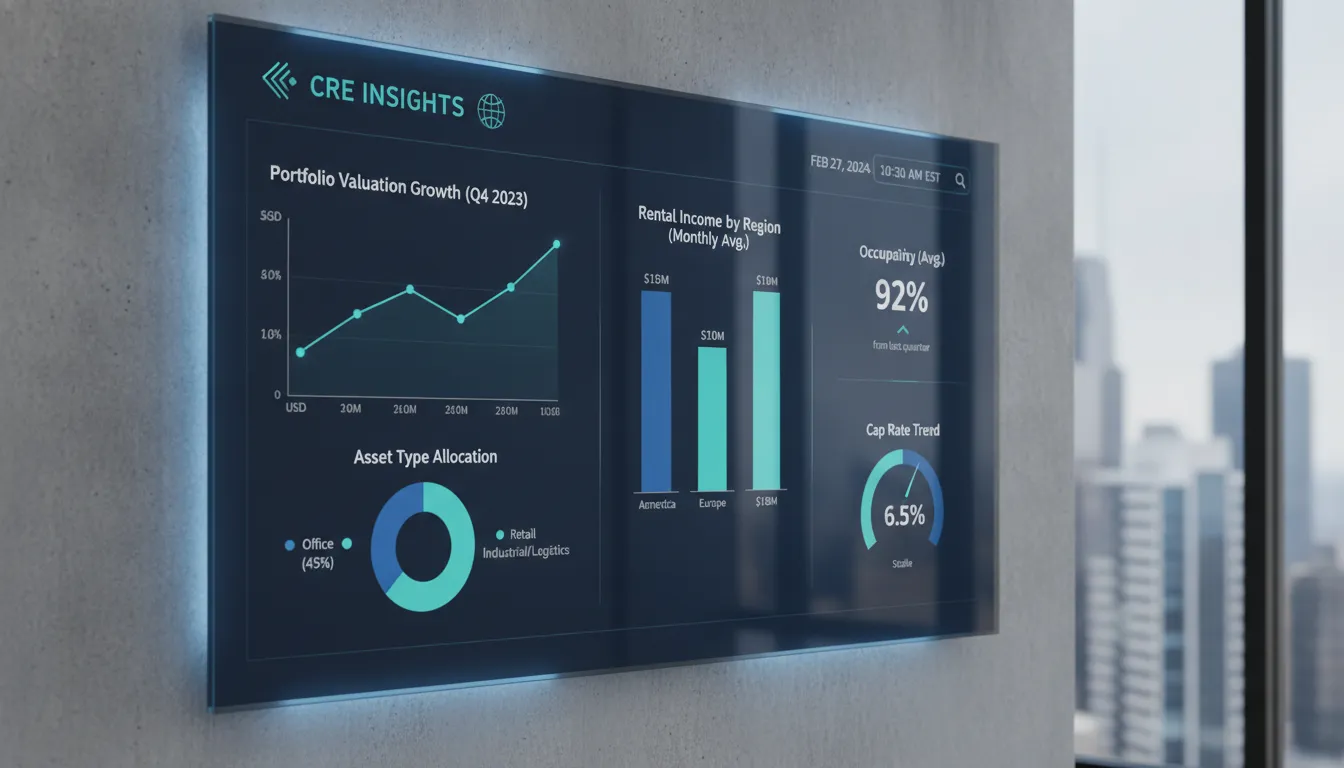
Good commercial real estate accounting means more than just tracking rent. It gives you a clear view of how each asset works. A growing portfolio needs a solid way to track health and growth. Many large funds use reporting standards to show clear facts to their teams and banks. These rules help you see the real value of your land and buildings over time.
Core financial reports for CRE
The base of a strong portfolio starts with three main sheets. You need a balance sheet, a profit and loss statement, and a cash flow report. These tools show where your money is and how it moves. For those who manage deals with partners, syndication accounting reports are also key. They keep every person in the loop about their own stakes and gains.
Reports for each property offer even more facts. A rent roll shows who has a lease and where you have empty space. You should also check for late rent to find risks fast. Looking at these items helps you spot bugs before they grow into big problems. It also makes sure you follow the law when you report rental income to the IRS each year.
Key performance stats for investors
KPIs turn raw facts into a plan for growth. The most common tool is Net Operating Income (NOI). This number shows how much profit a building makes after you pay the bills for the site. It does not count debt or taxes. By looking at NOI, you can compare one property to another even if they are not the same size. This helps you find which sites in your group make the most money.
Banks look at other rates to judge your risk. The Debt Service Coverage Ratio (DSCR) is a big one. It compares your NOI to your loan costs. A high rate means your property earns enough to pay its debt with cash left over. You should also track your cash-on-cash return. This tells you the yearly gain based on the actual cash you put into the deal. Utilizing precise DSCR loan accounting methods makes it easier to talk to lenders when you want to buy more.
Using facts to drive asset growth
Using facts to make choices is the way to grow your wealth. When you know your numbers, you can see trends early. Maybe one town has rising costs that cut your gains. Or maybe one site has room for higher rents. Good reports let you see these paths for growth in a clear way. Partnering with DMR Consulting Group allows you to use these facts to move your cash to the spots where it will do the most good.
Clear reports also build trust with your team and your bank. Lenders are more likely to fund new deals when they see that you have a path of success. Good records show that you are a pro who knows how to handle risk. This helps you build a larger and more stable group of properties. It turns simple land owning into a business that can grow for a long time.
When Should You Partner with a Specialized CRE CPA and CFO?
Working with DMR Consulting Group means you partner with a specialized commercial real estate CPA and CFO team who understand the unique dynamics of scaling a commercial real estate portfolio.
Most real estate investors start by tracking their own books. They often use basic tools or simple sheets to keep track of rent and bills. This works well for a few units, but as a group grows, the work becomes a heavy load. Managing five or more assets adds many layers of risk.
Recognizing the limits of basic software
Basic book apps are great for small tasks. But they lack the tools that professional real estate accounting services provide for large groups. Partnering with a specialized CPA firm like DMR Consulting Group ensures you receive robust financial support tailored for investors.
Growing a group requires more than just tracking cash in and cash out. You need full reports that show how your whole firm is doing at any time. Expert help ensures your books stay clean as you add doors.
An expert CPA helps you move past simple entries. They set up systems that capture every part of your work. This data helps you find which buildings earn the most profit and which ones cost too much to run. Without this view, you might miss big trends that could hurt your cash flow.
Navigating complex tax and lease rules
Tax laws for large assets are not the same as those for small homes. For example, the IRS has strict rules about how you report rent. You must report rent in the year you get it if you use the cash way for taxes.
This includes advance rent payments which must be part of your gross income right away. A plain tax pro might miss these small but vital details. Lease deals for business spaces also bring unique tasks.
You must track lease funds and shared costs with care. If you return the funds at the end of a lease, you do not count them as income. But if you keep the cash because a tenant broke the rules, it becomes taxable. DMR Consulting Group provides dedicated real estate advisory services to keep your firm in safe hands.
Shifting to smart CFO expert help
A book clerk looks at what happened in the past. A CFO looks at what will happen in the future. As you scale, you need to shift from simple tracking to high level plans.
This is where our specialized fractional CFO services add the most value. They help you look at Net Operating Income and find ways to raise the worth of your assets. They act as a partner who helps you plan your next big buy.
Smart help gives you the trust to take on larger deals. They help you plan for big costs like new roofs or paved lots. By knowing your numbers, you can talk to banks with ease.
This level of support turns your group of assets into a true business engine. Learning more about our team shows how we can handle the hard math while you focus on finding deals.
Frequently Asked Questions
How do tenant-paid expenses impact a landlord’s taxable income?
If a tenant pays for property bills like utilities or repairs, you must report these as rental income. The IRS says these sums count as income because they pay for your costs. You can usually deduct the same amount if the cost is a normal rental expense. This keeps your books right and shows the full value the property makes. It also helps you stay in line with tax laws for your growing portfolio.
Does a lease cancellation payment count as rental income?
Yes, money you get from a tenant to end a lease early counts as rental income. You must report the full sum in the year you get it. The IRS treats this as rent because it takes the place of future payments. Tracking these one-time sums is a key part of good book work. It helps you see your true cash flow and makes tax time much easier for your real estate business.
Are lease extensions treated as new contracts in accounting?
Most rules treat lease extensions or big changes as new contracts for your books. This ensures your balance sheet shows the current terms for your assets. According to Harvard University financial policies, these changes may need a new look at how you list the lease. Keeping up with these rules helps you stay ready for banks or new partners. Clear records are vital when you want to scale your property holdings to the next level.
How do security deposits become taxable for property owners?
You do not pay tax on a security deposit when you first get it if you plan to give it back. But the IRS says if you keep the money for damages or a broken lease, it becomes taxable. You must report the kept amount as income in the year you use it. Managing these funds well prevents errors in your property books. It ensures you only pay tax on the money you actually keep.
Ready to scale your commercial real estate portfolio?
Managing a large property portfolio needs more than just basic bookkeeping. Without a good system, poor data can hide leaks in your cash flow and cause you to miss tax breaks. If you lack clear numbers today, you risk making poor choices for your next big buy which can stall your growth. Starting now helps you stay ahead of the IRS and keeps your books ready for bank reviews or new loans. You get the data you need to scale fast while keeping your tax bill as low as possible. Do not let messy files and complex tax rules slow your path to building a larger portfolio and long-term wealth.
Ready to scale? Schedule a free commercial real estate portfolio consultation to talk to a CPA today.